

What Are Adenoids? Causes of Enlarged Adenoids in Children
What Are Adenoids? Understanding Enlarged Adenoids in Children
If your child frequently breathes through the mouth, snores at night, or has a constantly blocked nose, your doctor may mention that the problem could be due to enlarged adenoids.
This often worries parents because adenoids cannot be seen by simply opening the mouth. However, enlarged adenoids are a common condition in children and can usually be managed effectively when diagnosed early.
Understanding what adenoids are and why they become enlarged can help parents recognise symptoms sooner and seek timely treatment.
What Are Adenoids?
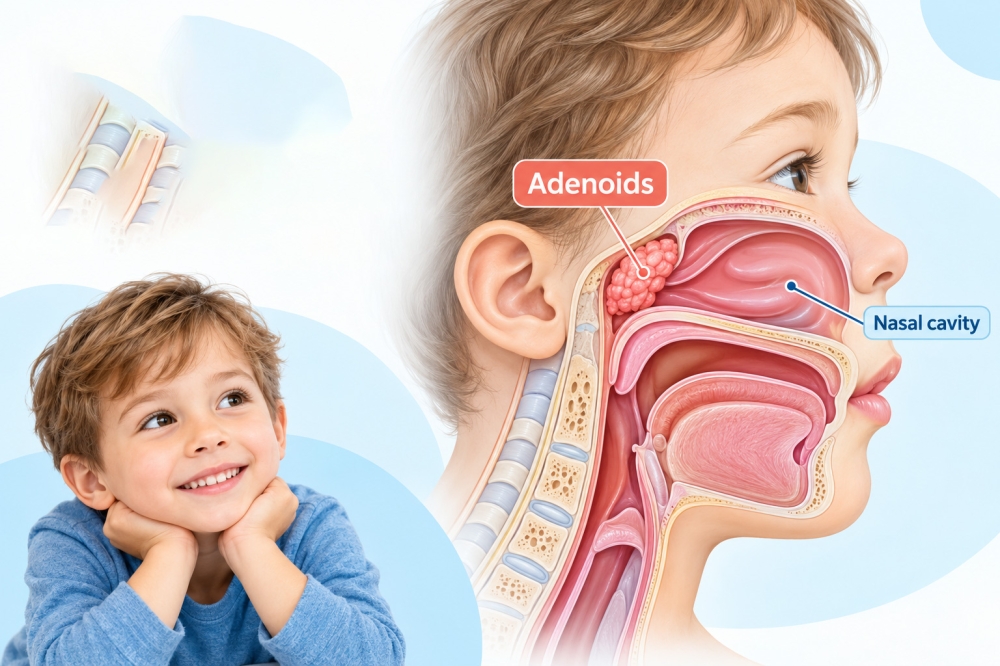
Adenoids are small masses of lymphoid tissue located behind the nose and above the roof of the mouth (soft palate). They are part of the body's immune system and help trap bacteria, viruses, and other germs that enter through the nose.
Along with the tonsils, adenoids act as the body's first line of defence during early childhood by helping the immune system fight infections.
Because adenoids are located behind the nasal cavity, they cannot be seen during a routine mouth examination.
Want to know the early warning signs? Read our detailed guide on Symptoms of Enlarged Adenoids in Children.
What Is the Function of Adenoids?
In young children, adenoids play an important role in building immunity.
Their main functions include:
- Trapping bacteria and viruses entering through the nose
- Producing infection-fighting immune cells
- Supporting the body's natural defence system during early childhood
As children grow older, the immune system becomes stronger, and the role of adenoids gradually becomes less important.
At What Age Are Adenoids Most Active?
Adenoids are usually largest between 2 and 6 years of age.
After this age, they naturally begin to shrink and often become very small during adolescence.
This is why enlarged adenoids are much more common in young children than in teenagers or adults.
Why Do Adenoids Become Enlarged?
Adenoids normally increase in size while fighting infections. In many children, they return to their normal size after recovery.
However, some children develop persistently enlarged adenoids due to repeated infections, allergies, or other factors.
Common Causes of Enlarged Adenoids
1. Recurrent Viral or Bacterial Infections
Frequent colds, throat infections, or respiratory illnesses can cause the adenoids to remain swollen for a long time.
Repeated infections are one of the most common reasons for enlarged adenoids in children.
2. Allergies
Children with allergic rhinitis or persistent nasal allergies may develop chronic inflammation of the adenoids.
This ongoing irritation can cause the tissue to enlarge over time.
3. Frequent Exposure to Germs
Children attending daycare or school are exposed to more viruses and bacteria, increasing the chances of repeated infections that may affect the adenoids.
4. Air Pollution and Passive Smoking
Constant exposure to polluted air or cigarette smoke can irritate the upper airway and contribute to chronic enlargement of the adenoids.
Protecting children from indoor and outdoor air pollution supports better respiratory health.
5. Genetic Factors
Some children may naturally have larger adenoids or a family history of enlarged adenoids, making them more likely to develop symptoms.
6. Chronic Nasal Inflammation
Persistent inflammation inside the nose due to allergies, sinus infections, or environmental irritants may also contribute to enlarged adenoids.
If your child already has these symptoms, learn how doctors confirm the diagnosis in our guide: How Are Enlarged Adenoids Diagnosed?
Are Enlarged Adenoids Dangerous?
Not always. Many children have mildly enlarged adenoids without experiencing any symptoms.
Problems occur when the enlarged adenoids block the airway, making it difficult for the child to breathe normally through the nose.
If left untreated, severe enlargement may affect sleep quality, hearing, speech, facial growth, and overall quality of life.
Can Enlarged Adenoids Be Prevented?
It may not always be possible to prevent enlarged adenoids, but parents can reduce the risk by:
- Encouraging regular hand washing
- Keeping childhood vaccinations up to date
- Managing allergies appropriately
- Avoiding exposure to cigarette smoke
- Reducing exposure to air pollution whenever possible
- Seeking early treatment for recurrent throat or respiratory infections
These healthy habits also help reduce many other childhood respiratory illnesses.
Long-standing enlarged adenoids may affect sleep, speech, facial development, and hearing. Learn more in our article on Can Enlarged Adenoids Affect Speech and Facial Development?
When Should Parents Consult a Doctor?
Consult a paediatrician if your child:
- Snores regularly while sleeping
- Breathes through the mouth most of the time
- Has a blocked nose even without a cold
- Experiences disturbed sleep
- Suffers from frequent ear or throat infections
- Has difficulty concentrating due to poor sleep
Early diagnosis helps prevent complications and ensures your child receives the most appropriate treatment.
Frequently Asked Questions
Final Thoughts
Adenoids are a normal part of a child's immune system and help protect against infections during the early years of life. However, when they become persistently enlarged, they can interfere with breathing, sleep, and overall well-being.
Recognising the causes of enlarged adenoids and seeking timely medical advice can help children breathe better, sleep peacefully, and enjoy a healthier childhood.
If you notice symptoms suggestive of enlarged adenoids, consult Dr. Himanshu Agarwal, Senior Paediatrician & Child Specialist in Gurgaon, for an accurate diagnosis and personalised treatment plan.